

In strata, owners’ corporations, or body corporate communities, what you do and how you choose to live affects more than just your own private property; it creates an impression of what outsiders think of your home and how the building is valued in the market.
Laundry may seem like a simple part of daily living, yet questions like ‘Can I hang washing on my balcony?’ or “Who enforces laundry rules?’ are among the most common pain points in strata living.
Limited indoor space, concerns about building appearance, and the growing desire to reduce energy costs are driving more people to use balconies and shared areas to dry clothes. Because of this, owners corporations and body corporates may implement by-laws or building rules that outline what is permitted, helping to strike a balance between fairness, safety, and preserving the building’s appearance. Whether you’re an owner or a committee member, understanding your responsibilities and rights is essential when it comes to navigating laundry matters within strata.
What feels like a small inconvenience to one person can quickly become a recurring frustration for their neighbours.
This is why having clear, modern, and enforceable by-laws or building rules is essential. It helps everyone understand what is allowed and that committees can act reasonably and confidently when problems arise. Here are the key reasons why laundry by-laws and building rules are commonly implemented:

Visible washing on balconies or railings can make a property look untidy and reduce its market appeal. By-laws or building rules help maintain a clean, consistent look that protects property values.

Unsecured clothes racks or items hanging over balcony edges can fall and injure people or damage property below. Rules are designed to prevent these hazards.

Communal laundry rooms and clotheslines need equitable use. By-laws or building rules help maintain fairness by allowing everyone to get a fair share of these spaces without disputes.

Drying clothes in stairwells or common areas can block escape routes and increase the risk of fire. Indoors, excess moisture from wet laundry may lead to mould and structural damage. Regulations help prevent these problems.
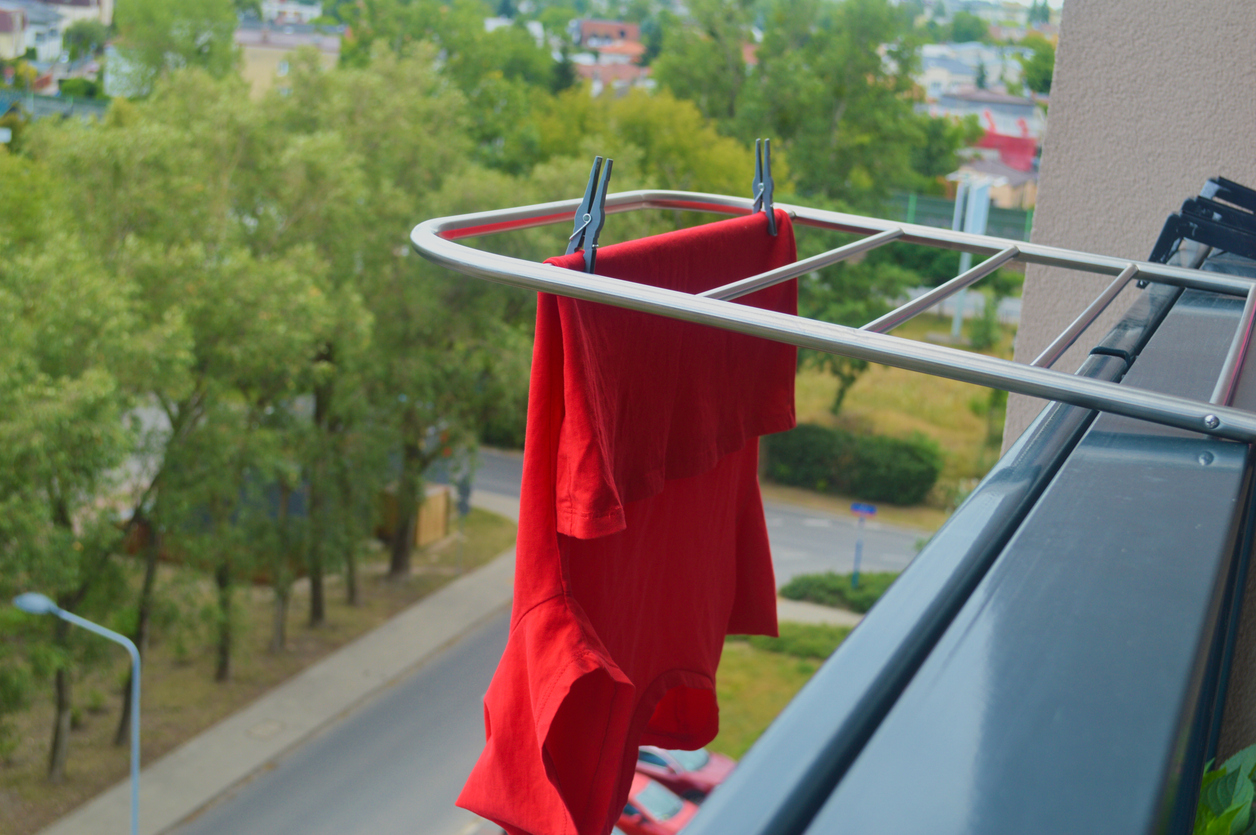
All owners have the right to enjoy their property in their own way. However, owners corporations or body corporates may have specific by-laws and building rules in place to regulate how residents can use their lots and shared spaces.
They generally apply to all residents and tenants and may include restrictions about where strata clothing and laundry can be hung and how shared facilities should be used. Below are some common issues that laundry by-laws and building rules can help govern:

Clothes draped over balcony railings or visible from outside are often restricted or prohibited. Depending on the by-laws or building rules in place, some schemes allow this only if it's discreet or approved in writing beforehand.
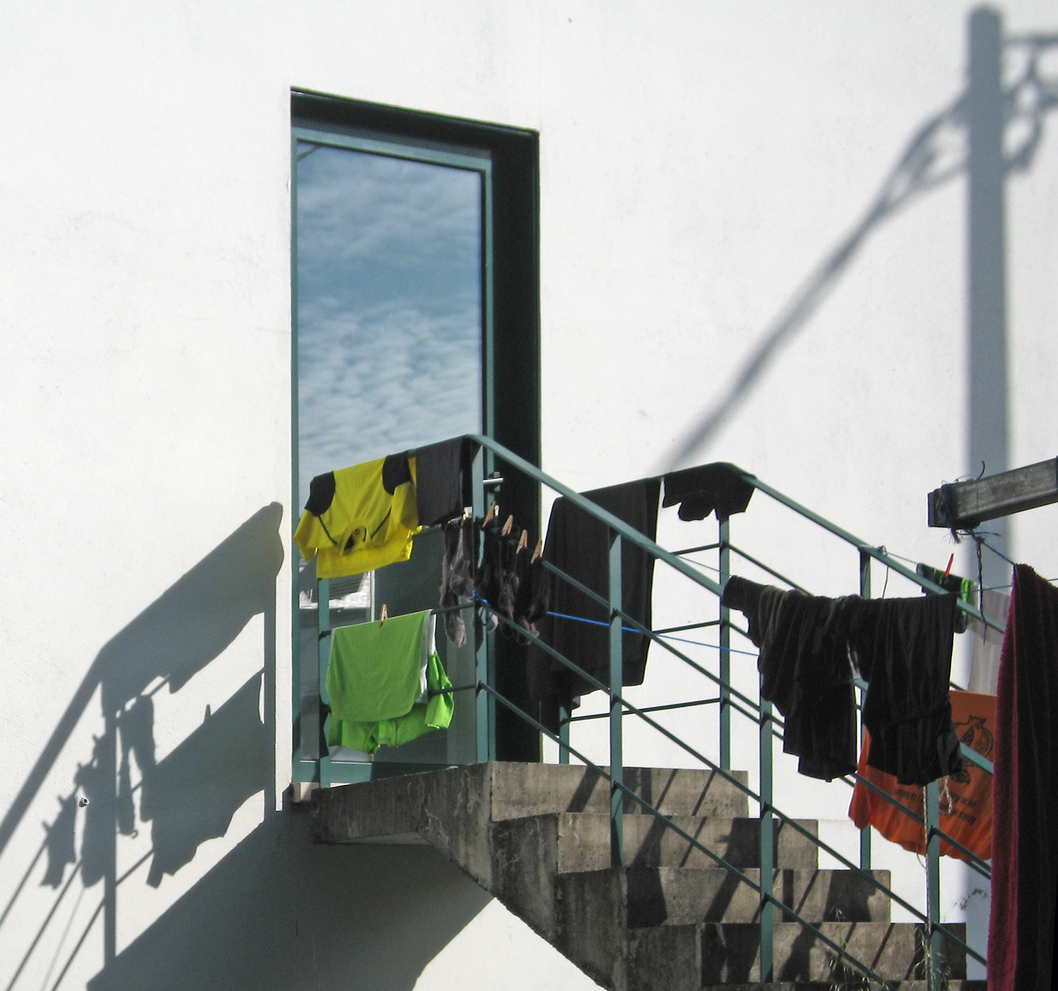
Laundry items placed in hallways, courtyards, or rooftop areas may require formal permission or must follow posted rules, such as using only clotheslines provided by the owners corporation or body corporate.
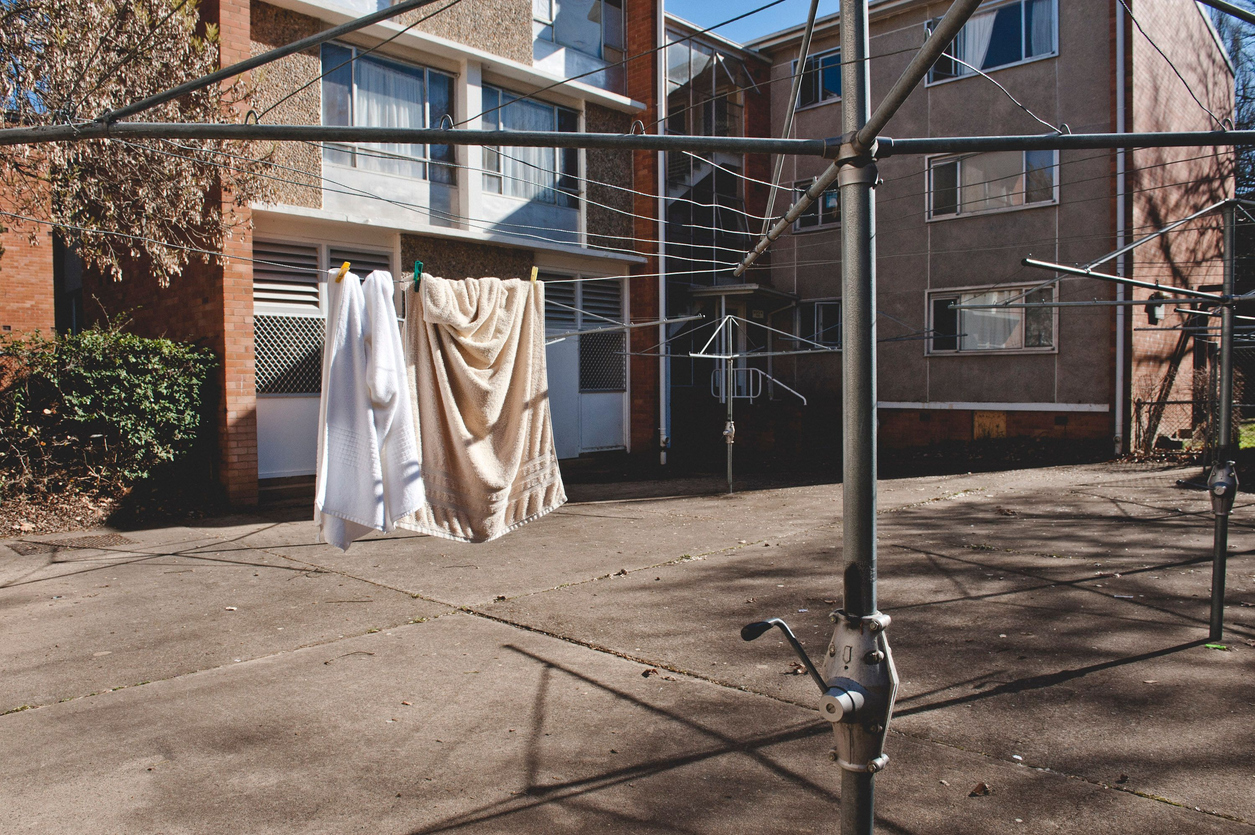
Structural or aesthetic changes can trigger approval requirements, and owners may need a resolution depending on the scope of work.

Overstaying machine use or leaving washing unattended often breaches house rules and causes disputes.

Although many laundry by-laws share similar themes, each state and territory has its own legislative framework.
Owners corporations or body corporate may adopt model by-laws or set different rules, which is why it is also always best practice to check the registered by-laws or building rules for your scheme.
In NSW, the Strata Schemes Management Regulation 2016 includes model by-laws (‘Hanging out the laundry’) that many schemes adopt or adapt. This generally allows residents to hang washing on balconies, provided it is not visible from the street or common property, and is not hung over balcony railings. Washing on communal lines must be removed within a reasonable period.
Committees may also adopt stricter rules provided they are not harsh, unconscionable, or oppressive. Enforcement occurs through notices to comply, penalty orders, and NSW Civil and Administrative Tribunal (NCAT) hearings if required.
The body corporates registered by-laws or building rules govern laundry and can be found in the Community Management Statement (CMS). This may vary by scheme, but it commonly restricts washing that is visible from common property or the street, or being hung over balcony railings, due to safety concerns.
Body corporates issue contravention notices for breaches. Ongoing issues may be escalated to the Office of the Commissioner for Body Corporate and Community Management. Consistency and documentation are important, as Queensland places strong emphasis on fair enforcement.
Under the Owners Corporations Act 2006, owners corporations have the power to make building rules regarding the drying of laundry on common property, balconies, or when visible externally.
Penalties can be issued for breaches, but they must be based on procedural fairness and supported by documented evidence.
Many Victorian schemes have older rules that may need updating to reflect modern living habits. Clear guidance and education can significantly reduce misunderstandings.
A body corporate has broad powers to create by-laws governing the use of common property and lots. While there are no specific model rules for laundry, schemes typically include clauses that restrict drying clothes in visible areas or on balcony railings for safety and aesthetic reasons.
Compliance is managed internally through notices and, if unresolved, is escalated to the Northern Territory Civil and Administrative Tribunal (NTCAT). Clear documentation and adherence to procedural fairness are essential for enforcement.
The Strata Titles Act 1998 includes model by-laws in Schedule 1, which apply unless replaced by custom rules. These generally prohibit laundry being hung where it is visible from outside the lot and regulate the use of shared facilities.
Breaches are addressed through compliance notices and, if necessary, applications to the Resource Management and Planning Appeal Tribunal (RMPAT). Education and consistent enforcement help maintain harmony in smaller strata communities.
As living habits evolve, many older laundry by-laws or building rules no longer reflect community expectations. With energy costs rising and sustainability becoming increasingly important, line drying is becoming more encouraged. If rules are outdated or ambiguous, consider changing or adding a new by-law or building rule that is clear and meets the needs of the owners corporation or body corporate.
Disputes often arise when owners feel that a by-law or building rule is overly restrictive and impacts their rights or enjoyment of their property. Instead of blanket bans, many buildings are adopting more modern rules, such as:
The best way to avoid disputes is to source assistance from professionals who can help draft, consolidate and register rules that balance community needs with individual rights.
A committee proposed banning all dryers in their shared laundry facilities to help reduce fire risk. However, such a blanket ban could be considered overly restrictive and may be challenged at the tribunal.
Instead, the committee could adopt by-laws that address fire safety, including proper ventilation, displaying fire hazard warnings, and providing extinguishers.
Here are some of the most commonly asked questions and top tips when it comes to changing or adding in a new by-law or building rules in your strata, body corporate, or owners corporation property.
If your neighbour is hanging out their laundry in a way that contravenes the scheme’s by-laws or building rules, consider letting them know in a kind manner.
If you feel uncomfortable about approaching them, you can ask your committee or strata manager to issue a warning or, when necessary, issue more formal correspondence to the relevant parties.
After an initial reminder or informal conversation, committees may issue a formal notice to comply, which can be delivered via a physical letter or email.
The notice should be respectful, factual, and include:
If the breach continues after the notice, the owners corporation or body corporate can escalate the matter to your state’s tribunal for an enforcement order, which may result in fines and penalties.
Here’s how to handle strata by-law and building rule violations, navigate disputes, and issue breach notices.
It is always best practice to review your scheme’s by-laws and building rules to understand what your building permits, including visibility rules and approved drying areas.
If in doubt, you can seek clarification from your strata manager or written approval from the committee.
If you believe a by-law or building rule is unreasonable, you can request a formal review rather than ignoring it.
If you are permitted to use your balcony to dry items, be aware that portable clothes racks can fly off the balcony in strong winds and cause injury to others or damage. Additionally, if your laundry falls onto the balcony below yours or blows onto another owner’s private property, it may upset your neighbours and make things awkward.
In this case, you can consider using an allocated clothesline or a portable clothes rack, provided your by-laws or building rules permit this.
Drying clothes indoors can increase moisture levels by up to 30%, creating ideal conditions for mould and dust mites. Whenever possible, dry laundry outside or in a well-ventilated indoor area away from bedrooms and living spaces. If drying indoors, make sure the room is adequately ventilated to reduce moisture and mould risk, and secure portable racks on balconies to prevent accidents.
Strata managers are trained professionals who can assist with enforcing by-laws and resolving disputes. They guide committees and owners through the next steps, helping achieve practical, long-term solutions.
Strata managers can review your current by-laws and building rules and assess whether they are compliant with state laws, outdated, ambiguous, or too restrictive.
In collaboration with legal professionals, they can help draft clear, modern by-laws or building rules that balance sustainability, aesthetics, and safety – covering areas such as balcony drying, the use of communal clotheslines, and other laundry-related practices.
Strata managers manage the by-law enforcement process for the owners corporation or body corporate. They can assist with:
They provide practical solutions, such as creating dedicated drying zones or enhancing shared facilities, to meet modern living standards without compromising the building’s appearance or safety.
They communicate changes effectively so that residents understand what is allowed and why. This reduces confusion and promotes voluntary compliance.
Before renewing your agreement, take a moment to compare your options. Our quick and easy form can be completed in less than 30 seconds.
This article is edited by Lauren Shaw Regional General Manager and Licensee-in-Charge on February 2026